Why Cost Optimized Automation Will Beat Advanced Automation in 2026
- Home
- insights
- Why Cost Optimized Automation Will Beat Advanced Automation in 2026
🚀 The automation reality entering 2026
As manufacturing steps into 2026, the conversation around automation is changing. For years, industries chased advanced platforms packed with features, dashboards and complex AI layers. Many of those systems looked impressive in presentations but struggled on the plant floor.

Why cost optimized automation is becoming the smart choice
Cost optimized automation does not mean low quality or compromise. It means designing automation with a clear purpose and a defined return.
Here is why it is winning over heavy advanced automation programs:
- Faster value realization: Manufacturers want to see improvements within months, not years. Targeted automation focused on specific bottlenecks delivers visible gains quickly.
- Lower total cost of ownership: Simpler architectures, modular deployment and minimal customization reduce long term maintenance and upgrade costs.
- Easier adoption by engineering teams: Automation that respects existing workflows and engineering logic gets accepted faster. Engineers trust systems they can understand and validate.
- Scalable across plants and programs: When automation is designed as reusable building blocks, it scales horizontally without reengineering everything from scratch.
In short, cost optimized automation aligns with how real factories operate, not how brochures describe them.
Why Frugalhacks?
Frugalhacks was built around one belief: automation must serve engineering, not overpower it.
Instead of pushing expensive platforms, Frugalhacks focuses on solving real operational problems such as cycle time reduction, quality consistency and engineering effort optimization.
What sets Frugalhacks apart:
- Deep understanding of OEM and supplier engineering workflows
- Automation that combines rule-based logic with practical AI where it truly adds value
- Outcome driven scoping with clearly defined KPIs before development begins
- Solutions designed to integrate with existing CAD, PLM, ERP and MES systems
Frugalhacks does not chase automation trends. The focus is on what works reliably in production environments.
How Frugalhacks helps automate the industrial production lifecycle
Frugalhacks supports automation across the full lifecycle, always with cost and ROI in focus.
- Design and engineering stage: Automated design checks, rule validation and BOM consistency reduce downstream errors and engineering rework.
- Pre-production and validation: Manufacturability checks and process validation catch issues early, saving tooling and prototype costs.
- Production and assembly: Lightweight automation improves line balancing, sequencing and coordination without large system overhauls.
- Quality and inspection: Vision systems combined with rule-based validation improve first pass yield while keeping human oversight.
- Continuous improvement: Operational data is converted into clear insights that help teams refine processes and replicate success across plants.
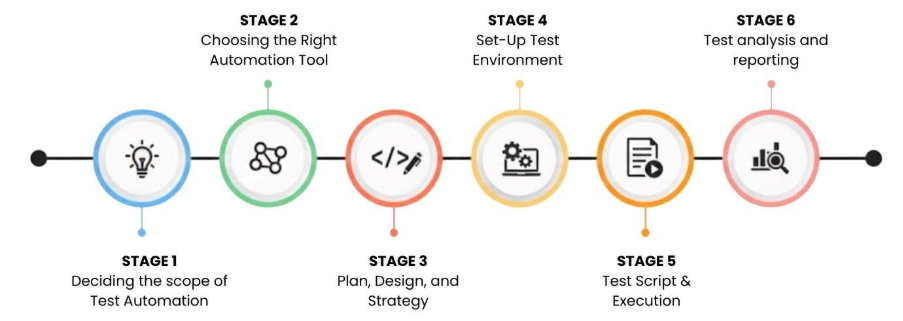
6 stages of Automation Testing Life Cycle (ATLC)
Real world data shaping automation decisions
The shift toward practical automation is backed by strong industry data.
- Global industrial automation continues to grow steadily, with market projections exceeding USD 300 billion before the end of the decade, reflecting sustained investment but cautious spending decisions.
- Deloitte’s smart manufacturing research highlights that manufacturers prioritize productivity, speed to market and workforce enablement over feature heavy systems.
- Industry analysts consistently report that enterprises focusing on targeted automation initiatives achieve higher ROI compared to large scale, multi-year automation transformations.
- Countries investing heavily in affordable robotics and modular automation solutions are seeing faster adoption across mid-sized manufacturers, proving that cost efficiency accelerates scale.
These trends confirm that automation success in 2026 is about focus, not excess.
Frequently Asked Questions
- What exactly is cost optimized automation
It is automation designed to deliver maximum operational impact with minimum complexity and cost, without sacrificing reliability or quality. - Is cost optimized automation suitable for large manufacturers
Yes. Large organizations benefit significantly because modular automation scales easily across programs, plants and regions. - Does Frugalhacks replace existing automation systems
No. Frugalhacks enhances and complements existing systems through integration and targeted automation layers. - How soon can results be measured
Depending on the scope, many initiatives show measurable improvement in efficiency, quality, or cost within three to nine months. - How does Frugalhacks ensure long term sustainability
By using explainable logic, documented rules and modular architecture, solutions remain maintainable and adaptable over time.
Conclusion
In 2026, automation success will not be defined by how advanced a system looks but by how reliably it improves daily operations. Cost optimized automation aligns with real manufacturing needs, realistic budgets and practical timelines.
Frugalhacks stands at the intersection of engineering expertise and automation discipline. The goal is clear: deliver solutions that work on the shop floor, earn engineer trust and generate measurable ROI.
That is not just a strategy for 2026. It is a long-term commitment to sustainable industrial automation.
Related Articles
- Tags : affordable automation solutions, ATLC automation, automation ROI, automation testing life cycle, cost optimized automation, engineering automation, factory automation trends, frugal automation, Frugalhacks automation, industrial automation 2026, industrial digital transformation, manufacturing automation strategy, modular automation systems, production automation solutions, shop floor automation, smart manufacturing ROI